
04 · Atlantic Coast Experience
Where the Ocean Meets Morocco
Where the Ocean
Meets Morocco
The Atlantic Coast Experience of Morocco stretches for over 2,500 kilometres from the Strait of Gibraltar all the way to the edge of the Sahara. It is a different Morocco from the medinas and the mountains, wilder, more open, shaped by the force of the ocean and centuries of maritime and trading history. The light on the Atlantic coast is different too: cleaner and cooler than the light of the interior, the colours are bleached and vivid at the same time, and the ocean wind makes everything feel awake.
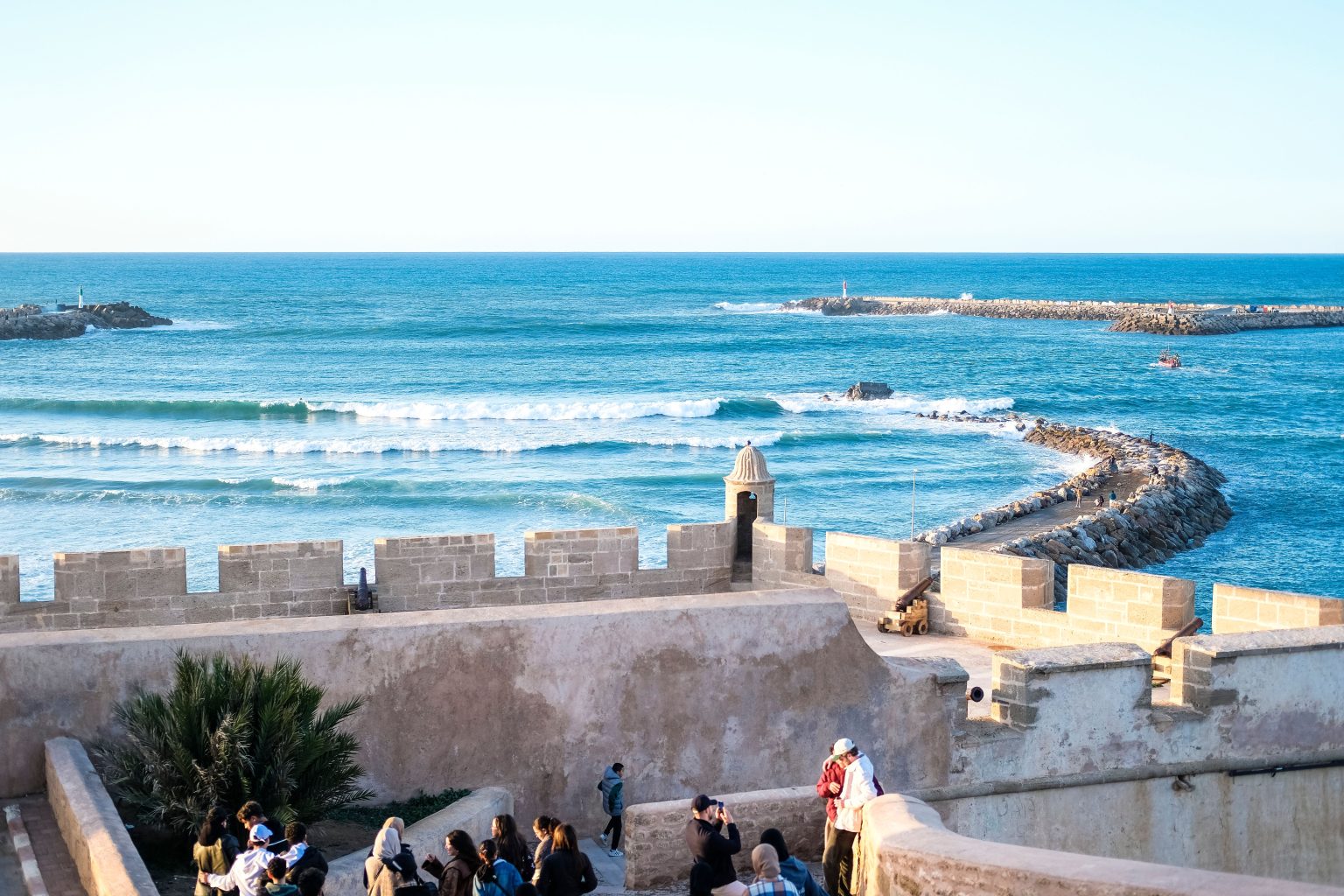
Essaouira is a walled city of striking beauty. The Portuguese built the ramparts in the 18th century and the medina behind them has barely changed since. The blue fishing boats in the harbour, the argan oil pressing rooms in the lanes, the wood carvers in the souk who work the thuya root into objects of great delicacy, all of this is still here and still working. We walk the ramparts at dawn when the only sound is the ocean crashing below and the gulls calling above the walls.
In Rabat we explore the Oudaias Kasbah above the estuary where the Bou Regreg river meets the Atlantic, the Hassan Tower, the Mausoleum of Mohammed V and the UNESCO listed medina. In Casablanca we arrange an interior visit of the Hassan II Mosque, one of the largest religious buildings on earth, built over the ocean on a foundation of reinforced concrete and marble that took 35,000 craftspeople six years to complete. Tangier in the north connects three continents and has one of the most dramatic positions of any city in the world.
What You Will Do on This Atlantic Coast Experience
- Essaouira ramparts walk at dawn: the Portuguese fortifications above the crashing Atlantic, before any other visitor arrives
- Essaouira medina: the blue fishing harbour, the argan oil workshops, the thuya wood carvers and the fish market
- Rabat: the Oudaias Kasbah above the ocean, the Hassan Tower, the Mausoleum of Mohammed V and the UNESCO medina
- Casablanca: interior visit of the Hassan II Mosque, built over the Atlantic and large enough to hold 105,000 worshippers
- Tangier: the Kasbah, the medina, the Socco, Cap Spartel lighthouse and the prehistoric Caves of Hercules
- Fresh Atlantic seafood lunch at the fishing harbour in Essaouira: prawns, sardines and sea bass straight off the boat
- Wild Atlantic beaches between Agadir and Essaouira: long stretches of white sand with no development in sight
- Optional visit to an argan oil cooperative in the Souss Valley: the women press the oil by hand as they have for centuries
How the Atlantic Coast Fits Into a Wider Trip
Almost nobody comes to Morocco only for the Atlantic Coast Experience, and that is the right instinct. It works best as the last two or three nights of a trip, after the medinas and the desert, when the heat and the noise have done their job and you want to stop moving. Essaouira is two and a half hours from Marrakech on a good road through the argan forest, so it costs you half a day and returns three days of rest.
If you have longer, the Atlantic Coast Experience rewards a slow line south: Essaouira, then Sidi Kaouki or Taghazout, then Agadir or Mirleft. North of Essaouira the coast is quieter still, and El Jadida with its Portuguese cistern is one of the least visited good things in the country.
What a Day on the Atlantic Coast Looks Like
Mornings are for the port and the ramparts, because the fishing boats come in early and the Skala de la Ville is at its best before the light goes flat. Late morning is the medina, which is a grid rather than a maze and takes about an hour to understand. Lunch is grilled sardines at the port stalls or something more considered at one of the harbour restaurants.
Afternoons on the Atlantic Coast Experience belong to the wind. From April to September it blows hard from the north west, which is why Essaouira is a kitesurfing capital and why the beach is for walking rather than lying on. If you want still air and swimming, go south to Sidi Kaouki in the early morning or choose October, when the wind drops.
Evenings are the reason people stay longer than they planned. The ramparts at sunset, then dinner, then the gnaoua musicians who play in the squares most nights of the year.
When to Come, and What the Weather Really Does
The Atlantic coast is the only part of Morocco that is comfortable in July and August, which is exactly why Moroccan families fill it then. It sits around 24 degrees when Marrakech is at 42. If you are travelling in high summer, this is where to put your beach days.
September and October are the best months overall: warm water, softer wind, empty streets. April to June is lovely but windy. December to February is mild, bright and almost empty, and the seafood is at its best, but the ocean is too cold for most people to swim.
Who the Atlantic Coast Suits, and What to Pack
This part of the trip suits people who have had enough of schedules, families with young children who need a day without walking, and anyone who surfs, kitesurfs or paints. It suits honeymooners particularly well, because there is nothing to organise. It suits people who came only for the Sahara less well, because after the dunes the coast can feel gentle.
Bring a windproof layer even in August, because the Atlantic coast is cooler than the rest of the country by ten degrees or more in the afternoon. Bring shoes you can walk the ramparts in. Leave room in the bag: the argan cooperatives on the Essaouira road and the thuya wood workshops in the medina are the two places in Morocco where people who do not buy things end up buying things.
They Travelled With Us
Mohammed had the talent to make us approach beautiful sites, far from places a little too touristy. He tells us with passion, humor and knowledge about his beautiful country. A true storyteller.
My 2nd trek with Authentic Travel Tour [now Afsou Travels Morocco] and with Mohamed, this time at Toubkal. Mohamed is a great guide, kind, very professional and attentive to all. Everything is perfectly organized and the scenery is beautiful. I recommend 100%.
Many thanks to our wonderful guide Mohamed and all his team for this wonderful week. We will have wonderful memories for a long time thanks to their warm welcome, their dedicated commitment and their kindness.
Ready to Plan Your Atlantic Coast Experience?
Tell us your dates and we will design every detail around you. No obligation and no pressure at any stage.
Private, tailor made Morocco tours with over 25 years of deep local knowledge. Your journey. Your way. Always.
Discover
Company
Contact
- info@afsoutravels.com
- +212 619 635 496
- Marrakech, Morocco
© 2026 Afsou Travels Morocco. All rights reserved.